


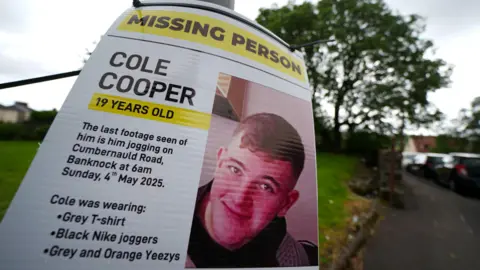
When young adult Cole Cooper walked out into a chilly May night recently, nobody would have thought he was in the last moments of his life.
He had been out with friends at a pub near his dwelling in central Scotland.
But a few hours after, his cellphone was dead - no messages, no digital activity.
After there was no sign of him after five days, his relatives contacted authorities.

Warning: This article contains emotional content and mentions of suicide
The Cooper family revealed that they advised authorities from the start that Cole's vanishing wasn't normal conduct - and that he had been facing challenges with his emotional well-being.
"We explained to the police about Cole's psychological condition. While Cole had not been identified with mental health issues or anything like that, he did face difficulties," said Wendy.
"And they nonetheless did not classify Cole as a serious risk.
"He's at no time escaped... police have not ever been concerned in my son's life until the time he went missing."

The police at first considered Cole to be moderate risk after conducting an analysis and speaking with relatives and companions.
They said Cole frequently moved between residences and that it was not uncommon for him to be out of touch with his relatives for periods of time.
Cole's family believed they had little option but to take matters into their own hands and initiate their own search request.
His aunt, Aimee, said: "We just determined we're going to take charge when they're not listening to us."
They employed online platforms, posting one simple post: "Did anyone spotted Cole?"
"The moment that it went on there, it started to kind of escalate," the relative said.
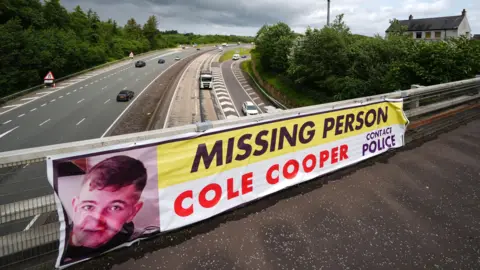
Cole's case began propagating across Scotland and further afield. His face was on multiple online clips, digital updates and Facebook updates.
The relatives set up a dedicated page, and potential sightings and details were shared via the internet between numerous individuals.
His aunt said they obtained many contacts from individuals who thought they had encountered Cole.
The family organised hunting groups, which included up to three hundred individuals at moments in the subsequent phases of their investigation.
The disappearance had surprised the local population in the village, the historic community on the shores of the waterway near to where Cole resided. Community members scoured the area as they helped with the hunt.
The family also began to conduct their own personal visits, encouraging inhabitants to check their security cameras.

"It's rather disheartening that it arrived at a stage where we were needing to resort to that," the relative said.
"In place of you focusing on your sorrow and your despair and your desperation for that individual, you're now in a different role."
The authorities says the household had stated a desire to conduct their own hunts and public calls, which they were entitled to do.
"We counseled them on this. Nevertheless, at no stage did law enforcement ask or prompt the household to head the search or give information," a representative said.
The authorities had also been looking for Cole.
Five days after he was noted as vanished, they issued their initial public request - then they raised his risk level from medium to elevated.
Recovery dog teams and drones were utilized, as well as the air support and underwater search teams.
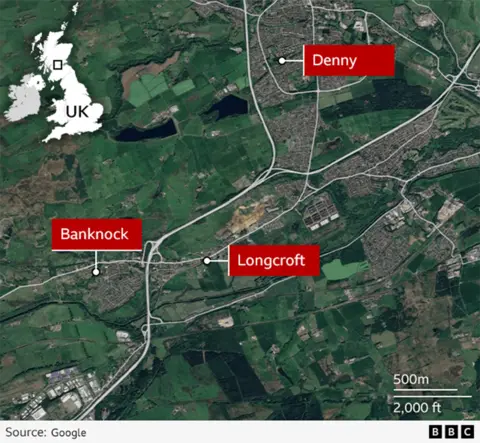
The household pieced together the concluding period of Cole's life and created a timeline of where the youth had traveled, seeking clues.
They located video of him from immediately following he departed the pub in the town, in the county, on the weekend evening.
He was recorded on surveillance proceeding to a private event, then afterward a residential surveillance picked him up walking to and from his dad's house, although he wasn't in.
The relatives got surveillance video from a vehicle service center which captured Cole as he headed down the central avenue at the location, pausing near a transit stop.
At 6 AM,


